What a Crazy Time predictor actually claims
The word "predictor" carries a specific product meaning in this market. A crazy time predictor app or crazy time signal bot typically appears as one of four product shapes: an Android APK, a browser site, a free Telegram channel, or a paid Telegram paid signal channel. The common claim across all four is that the next Crazy Time segment can be forecast from past results. The framing varies: some channels promote a crazy time signal feed based on patterns, others advertise a "hot/cold algorithm", and a growing number market themselves as "AI-powered prediction" tools. The product name changes; the underlying claim does not.
paid Telegram channels charge a monthly subscription, with pricing that ranges from INR 500 to several thousand per month, and they advertise accuracy figures such as "claimed accuracy 95%". Free channels run the same claims as a funnel into the paid tier or into affiliate casino links beneath the calls. The question of whether a crazy time predictor is real has a single answer regardless of product shape: the channel operator earns whether the call lands or not, because revenue comes from subscriptions and UPI access fees, not from the spin result.
Telegram VIP pricing: what subscriptions actually cost
The pricing structure across paid Crazy Time Telegram VIP channels in India follows a narrow band, regardless of the channel's accuracy claim. The table below summarises typical access tiers and what they include.
| Tier | Monthly INR | What it includes | What it does not change |
|---|---|---|---|
| Free channel | INR 0 | Bet calls during broadcast, affiliate links to casinos | Spin probability |
| Standard VIP | INR 500 to 1,000 | Same calls plus 'priority' Telegram group | Spin probability |
| Premium VIP | INR 1,500 to 3,000 | Same calls plus 'AI-powered' label or 'algorithm access' label | Spin probability |
| Lifetime access | INR 5,000 to 15,000 one-off | All calls bundled; sometimes resold via UPI fees | Spin probability |
The right column is the binding fact: every tier sells access to predictions the underlying mechanics cannot deliver. The channel operator collects subscription INR or one-off access fees regardless of the call result, so revenue is decoupled from accuracy by design. India players paying INR 500 to INR 3,000 per month for VIP access are paying for the access tier, not for an actual edge on the next spin.
Why each Crazy Time spin is independent
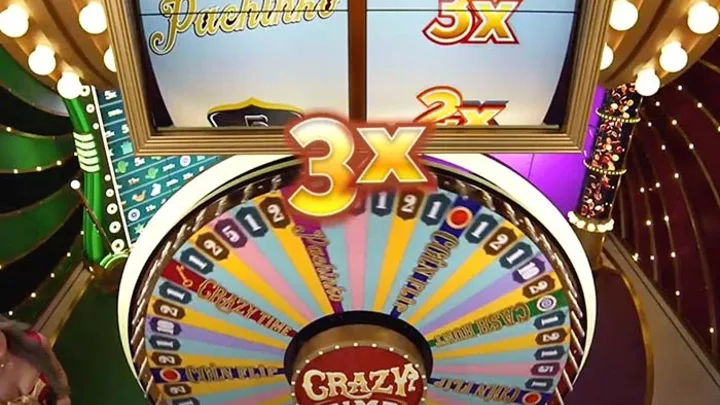
Evolution broadcasts Crazy Time live from the Riga studio 24 hours a day. The wheel itself is physical, not software: a metal flapper stops on one of 54 fixed spaces, which is why nothing carries over between rounds. Inside the bonus games a generator does assign the hidden values, but that changes nothing about the main wheel. The formal independence property states that P(segment X | history) = P(segment X). In plain English: the wheel does not remember the last spin. Past results are not an input to the next draw, so any tool that reads past results cannot change the probability of the next segment.
Crazy time independent spins explained with a direct example: suppose 10 consecutive spins land on segment 1. The probability that the 11th lands on segment 1 is still 38.89%, because 21 of the 54 spaces still say 1. The historical sequence is past data; the next spin draws from the same distribution regardless of what came before. The spin results tracker carries the round-by-round log if you want to watch that play out.
Hot and cold segments: what those labels really mean
The crazy time hot and cold segments myth comes from tracker labelling: a segment is called "hot" if it has hit more than expected inside the recent window, and "cold" if it has hit less. The window is typically the last 24 hours. Do hot and cold segments work in Crazy Time as predictors? No. Those labels are descriptions of the past, a count of what already happened compared against the expected count for that window. The next spin's probability is set by the published hit-rate, not by the recent count.
| Segment | Share of wheel | Expected in 24h | Normal range (+/-2σ) | Called hot above |
|---|---|---|---|---|
 1 1 | 38.89% (21 of 54) | 583 | 546-621 | 621 |
 2 2 | 24.07% (13 of 54) | 361 | 328-394 | 394 |
 5 5 | 12.96% (7 of 54) | 194 | 168-220 | 220 |
 10 10 | 7.41% (4 of 54) | 111 | 91-131 | 131 |
 Coin Flip Coin Flip | 7.41% (4 of 54) | 111 | 91-131 | 131 |
 Cash Hunt Cash Hunt | 3.70% (2 of 54) | 56 | 41-70 | 70 |
 Pachinko Pachinko | 3.70% (2 of 54) | 56 | 41-70 | 70 |
 Crazy Time Crazy Time | 1.85% (1 of 54) | 28 | 17-38 | 38 |
Any segment sitting below its expected count for a window is labelled "cold" instead, with the description column reading "Hit < expected in window". That label means it has hit fewer times than the probability suggests for that window, nothing more. The next spin does not adjust to compensate for the gap, and the published probability holds for every draw. For the live counts as of this session, see the live spin statistics page.
The point of that last column is what makes the hot label hollow. A segment gets called hot the moment it clears the top of its normal range, and any one segment does that on roughly one day in forty by chance alone. Watch all eight at once and about one day in six has something above its band, with nothing behind it but arithmetic.
Here are the actual counts right now, against the same expectations:
[DYNAMIC: 8-row table (1, 2, 5, 10, Coin Flip, Pachinko, Cash Hunt, Crazy Time) with columns Segment / Observed 24h / Expected / Inside normal range?; the last column renders yes or no against the +/-2σ band; fallback keeps the last synced counts with a "Latest synced data" badge]
Watch it across a few visits. Segments move in and out of the hot label continuously, and nothing about being above the band on one day carries into the next. That is what independent draws look like, and it is also what every hot-and-cold tracker is showing you.
The gambler's fallacy applied to the wheel
The crazy time gambler's fallacy is the mistake of treating independent events as if previous outcomes influence the next one. Applied to the wheel, this looks like assuming a long gap since a bonus round raises the probability of that bonus round on the next spin. It does not. Each spin draws from the same distribution. Long-run averages do return towards the published probabilities over many hundreds of spins, but the next individual spin is unaffected by gap length. That last point is the distinction between "regression to mean" and "set to land soon"; the former describes long-run statistics, the latter is the fallacy.
- 10 consecutive segment-1 results. P(next = 1) is still 38.89%, not lower.
- 80 spins without a Pachinko trigger. P(next is Pachinko) is still 3.70%, not higher.
- 200 spins without a Crazy Time segment. P(next is Crazy Time) is still 1.85%; the gap does not raise it.
Why pattern claims keep coming back (and keep failing)
Crazy time pattern myths spread through the same channels that circulate big win clips: YouTube Shorts, WhatsApp share groups, and Telegram forwards. A channel gains followers quickly after a few publicly visible correct calls, then produces the same inaccurate calls. Three structural reasons explain why crazy time pattern claims fail regardless of operator intent.
- Survivorship bias: Channels post winning calls and quietly delete losing ones. The displayed sample is curated, so the visible hit-rate looks high; the underlying hit-rate is still the baseline segment probability.
- Post-hoc fitting: After a spin lands, any recent sequence can be narrated as having "predicted" the result. That framing is constructed after the outcome and does not validate the prediction method.
- Small-sample illusion: Any 10-spin window contains apparent patterns. Those patterns vanish when the same analysis runs on 1,000 spins. The 54-segment wheel produces visible clustering at small samples because that is what independent draws look like in short windows.
The underlying maths is the same across all three failure modes: segment probability is fixed per spin at the published hit-rate, and the long-run RTP on each bet type (94.33% to 96.08% across bet types, per Evolution's published paytable) does not shift because a signal channel claimed a pattern. For the full numbers behind each segment and the house edge they produce, see the RTP reality page.
Hacks, tricks and "winning software"
Searches in this family split into two groups that deserve different answers.
Hack tools and cheat software. Nothing installed on your phone touches the wheel. The wheel is a physical object in a studio in Riga; the result is decided by where a metal flapper stops, and no app has a route to that. What a "Crazy Time hack" APK can reach is your device: a package delivered outside a casino's own domain has no chain of custody, and the permissions it asks for at install tell you more than its description does. The app page covers the safe install route.
Tricks and tips. This is the more reasonable search, and it has real answers, they just are not about forecasting. Bet sizing, spread choice, which bets return most, when to stop: all of that is decidable and none of it needs a prediction. Number 1 returns 96.08% against Pachinko's 94.33%, which is a fact you can act on today. The strategy page works through the rest.
The distinction matters because the two get sold together. A channel offering "tricks" often means signals, and a signal is a forecast wearing a friendlier word.
Predictor FAQ
Is there a real Crazy Time predictor app?
No working Crazy Time predictor app exists. Each spin is statistically independent, so no past-data input can change the probability of the next segment. Apps and Telegram channels claiming otherwise are selling forecasts that the wheel mechanics do not allow.
Can you predict which segment will land next in Crazy Time?
No. The next segment's probability matches the published hit-rate (1 = 38.89%, Pachinko = 3.70%, Crazy Time = 1.85%, and so on) regardless of the last 10 or last 100 spins. Independence is the structural reason, not a statement about luck.
What is the gambler's fallacy in Crazy Time?
The gambler's fallacy is the mistake of treating independent spins as if they were dependent. Example: 80 spins without a Pachinko does not raise the next spin's Pachinko probability. The published 3.70% holds.
Are "hot" and "cold" segments real in Crazy Time?
Hot and cold are labels for past results inside a window (typical: last 24 hours). They describe what already happened. They do not raise or lower the probability of any segment on the next spin. The next spin matches the published hit-rate.
Why do Crazy Time pattern claims fail?
Three failure modes recur: survivorship bias (channels post wins, delete losses), post-hoc fitting (any past sequence can be framed as a prediction after the result), and small-sample illusion (10-spin patterns vanish at 1,000 spins).
Crazy Time live signal channels: what do they actually do?
Live signal channels post real-time bet calls during the broadcast: 'next bet on Coin Flip', 'avoid Pachinko this spin'. None of these calls have predictive power; the wheel is physical and each round is independent of the last. Channels monetise through subscription fees (typically INR 500 to several thousand per month) or affiliate deposits at the casinos they link. Revenue is decoupled from call accuracy. A crazy time live signal, a crazy time signal bot, and a crazy time predictor bot all share the same underlying claim that the wheel mechanics do not support.